

In today’s fast-paced digital world, staying connected is more important than ever. But what exactly powers our mobile devices’ ability to browse the web, stream videos, and download content at high speeds? The answer lies in 4G, the fourth generation of broadband cellular network technology.
4G stands for the fourth generation of broadband cellular network technology, succeeding 3G and preceding 5G. It provides faster internet speeds, improved reliability, and better coverage, enabling advanced mobile services like HD video streaming, high-speed web browsing, and real-time gaming.
But there’s more to 4G than just speed improvements. Let’s delve deeper into what makes 4G pivotal in today’s digital age.
The History and Evolution of 4G Technology
Understanding 4G’s history sheds light on how our mobile experiences transformed so dramatically. The groundwork for 4G was laid around 2008 when the International Telecommunication Union (ITU) introduced a new set of requirements for the next generation of mobile networks, known as IMT-Advanced. This leap aimed to deliver much faster speeds—specifically, 100 Mbps on the move—and provide greater reliability than ever before.
In those early years, no existing mobile network could quite hit that ambitious mark. However, two main contenders emerged: LTE (Long Term Evolution) and WiMAX (Worldwide Interoperability for Microwave Access). Both technologies were seen as stepping stones between the slower 3G connections and the blazing speeds 4G promised. During this period, mobile carriers around the world backed different standards as they raced to meet the new requirements.
Ultimately, LTE proved more adaptable and widely adopted. By 2011, its advanced iteration—LTE-Advanced—began delivering the speed benchmarks set by the initial IMT-Advanced guidelines. As LTE networks expanded, WiMAX gradually faded from the scene, and LTE quickly became the foundation of global 4G networks.
The development of each mobile generation is a drawn-out process, with years of research, infrastructure upgrades, and device rollouts. As 4G matured, it paved the way for 5G’s emergence, continuing the cycle of innovation. Just as we’ve seen 2G and 3G networks retire, 4G’s widespread service will one day transition out, making room for the next wave of wireless technology.
What does 4G mean?
4G stands for fourth generation mobile network or fourth generation wireless network. It is the fourth generation of wireless communication technology for mobile devices, following 3G (third generation). It provides faster internet speeds, improved call quality, and better network reliability compared to previous generations.
What is 4G used for?
4G, also known as fourth-generation wireless, is used for high-speed wireless communication and mobile internet access. It provides faster data transfer rates compared to its predecessors, enabling users to stream videos, make video calls, download and upload files, and access the internet at faster speeds. Additionally, 4G is used for various applications like online gaming, streaming music, navigation services, and accessing cloud-based services.
What is a 4G network?
A 4G network allows users to access the internet and make phone calls at faster speeds compared to previous generations of networks. It supports download speeds of up to 100 megabits per second (Mbps) and upload speeds of up to 50 Mbps, although actual speeds can vary depending on network conditions. 4G networks also have lower latency, meaning there is less delay between when a user sends a request and when they receive a response. This makes activities such as video calling and online gaming more seamless. Overall, a 4G network provides a better mobile internet experience with faster speeds, lower latency, and more capacity for users and services.
How does 4G work?
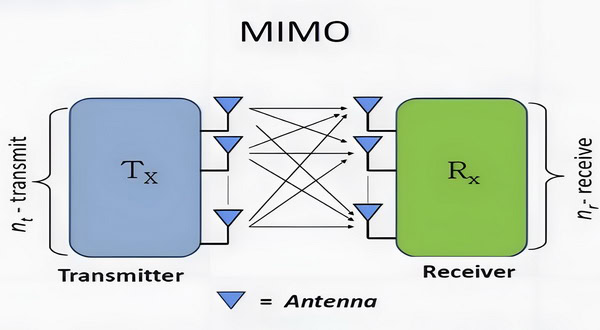
At its core, 4G operates using antennas that transmit data over radio frequencies, allowing mobile devices to connect to the network. The underlying technology relies on advanced methods such as MIMO (Multiple Input Multiple Output) and OFDM (Orthogonal Frequency Division Multiplexing). MIMO allows multiple data signals to be sent and received simultaneously, increasing both capacity and bandwidth. OFDM, on the other hand, efficiently divides the radio signal into multiple smaller sub-signals, which helps boost data speed and reliability compared to older technologies like TDMA (Time Division Multiple Access) and CDMA (Code Division Multiple Access) used in 3G.
Another significant difference is that 4G is an all-IP (Internet Protocol) based standard for both voice and data. While 3G networks used IP only for data and relied on separate circuit-switched networks for voice calls, 4G integrates everything over IP. This makes it easier and more efficient for network providers to manage, optimize, and expand their services, ultimately delivering a smoother and more robust mobile experience for users.
What are the key technologies behind 4G, such as MIMO and OFDM, and how do they improve performance compared to 3G?
4G networks rely on a sophisticated blend of technologies to deliver their impressive speed and reliability. Two of the most important innovations are MIMO (Multiple Input Multiple Output) and OFDM (Orthogonal Frequency Division Multiplexing).
MIMO uses multiple antennas at both the transmitter and receiver ends. This allows data to be sent and received simultaneously through multiple paths, increasing the amount of information transferred without requiring extra bandwidth. MIMO helps reduce network congestion, allowing more users to enjoy strong connections—even in busy areas like city centers or stadiums.
OFDM splits data into smaller chunks and transmits them over several frequencies at once. This technique ensures that even if one part of the frequency spectrum encounters interference or signal loss, the rest of your data keeps flowing smoothly. As a result, you get faster, more stable downloads and fewer interruptions when streaming or gaming.
Compared to 3G technologies (like TDMA and CDMA), these advancements mean greater capacity, faster speeds, and a more consistent experience for more people using the network at the same time. Ultimately, MIMO and OFDM are the backbone of what makes 4G so much more robust and efficient than its predecessors.
Since its initial rollout, 4G has seen substantial advancements in both speed and reliability. Early 4G networks already offered a notable leap over 3G, but ongoing developments—especially with the introduction of LTE-Advanced (LTE-A)—have pushed performance even further. Thanks to LTE-A, 4G networks are now capable of achieving speeds that meet or exceed the original standards set by the International Telecommunication Union (ITU), reaching up to 100 Mbps under ideal conditions.
Improvements like carrier aggregation, advanced antenna technologies (such as MIMO), and more efficient use of the radio spectrum have all contributed to these gains. As a result, users can enjoy smoother streaming, faster downloads, and more responsive online gaming, even in areas with heavy network traffic. This evolution ensures that 4G remains a powerful and reliable option for mobile connectivity as we move towards even faster technologies.
How does 4G reduce network congestion compared to 3G?
One of the significant improvements 4G brings over 3G is its ability to handle more users simultaneously without slowing down. This is largely thanks to advanced technologies like MIMO (Multiple Input Multiple Output). In simple terms, MIMO uses multiple antennas to transmit and receive more data at once, allowing the network to serve many users more efficiently. As a result, 4G networks experience less congestion during peak times, providing a smoother experience for everyone—whether you’re streaming a live concert or just catching up on emails.
What is the role of all-IP networks in 4G compared to previous generations?
One of the key advancements 4G brings over previous technologies is its use of an all-IP (Internet Protocol) infrastructure for both voice and data services. While older 3G networks relied on separate methods—using circuit-switched networks for voice calls and IP for data—4G unifies everything under one roof. This shift means that both your phone calls and data pass through the same efficient system, leading to better call quality, smoother data transmission, and easier management for mobile operators. For users, this results in faster connections, lower latency, and the flexibility to run advanced services like VoIP (Voice over Internet Protocol) and high-quality video calls without lag.
What are the technical differences between TDMA, CDMA, and OFDM?
To better understand what sets 4G networks apart, it helps to look briefly at the core technologies that have powered wireless communication across generations—namely TDMA, CDMA, and OFDM.
TDMA (Time Division Multiple Access):
TDMA is a method used in earlier networks like 2G and 3G, where multiple users share the same frequency channel by dividing signals into different time slots. Each user’s signal takes turns, allowing several users to share a single frequency without interfering with one another. However, as the number of users grows, managing those time slots becomes less efficient, sometimes leading to congestion during peak times.
CDMA (Code Division Multiple Access):
Used by many 3G networks, CDMA assigns a unique code to each call or data session. All the signals are transmitted simultaneously over the entire bandwidth, but the codes keep them separated, a bit like how different languages let many voices be heard in a crowded room without too much confusion. CDMA excels at maximizing available bandwidth, but as networks scale, cross-talk (interference) can still become an issue.
OFDM (Orthogonal Frequency Division Multiplexing):
4G moved to OFDM, a technology that divides the data into multiple smaller packets and transmits them over many separate frequencies at once. Each frequency operates independently and does not interfere with the others, allowing for faster speeds, more reliability, and greater capacity. OFDM is less susceptible to signal interference, which makes it particularly well-suited for handling dense data loads—perfect for today’s video streaming, online gaming, and crowded events.
Together with antenna innovations like MIMO (Multiple Input Multiple Output), OFDM forms the backbone of modern 4G networks—enabling smoother connections, reduced network congestion, and the seamless high-speed experience that defines our mobile lives.
What is 4G speed?
4G speed refers to the speed at which data can be transmitted over a 4G network. It is typically much faster than the previous generation of mobile networks, such as 3G. The actual speed can vary depending on various factors, including network coverage, the number of users on the network, and the device being used. However, in general, 4G speeds can range from around 5 to 50 megabits per second (Mbps), with some networks capable of reaching even higher speeds.
Is 4G the same as LTE?
No, 4G and LTE are not the same.
4G (or 4th Generation) is a broad term used to describe the fourth generation of mobile telecommunications technology. It encompasses various technologies such as LTE, WiMAX, and HSPA+.
LTE (Long-Term Evolution) is a specific type of 4G technology that provides high-speed wireless communication for mobile devices. It is commonly used by many cellular networks around the world.
Understanding the Difference
The distinction between 4G and 4G LTE largely comes down to technical standards and marketing. When 4G was first defined by the International Telecommunication Union (ITU) in 2008, its ambitious speed requirements—at least 100 Mbps for mobility—were difficult for networks and devices to achieve at the time. As a result, LTE was developed as a stepping stone between 3G and true 4G, offering a significant boost in bandwidth over 3G, but not always meeting the original 4G speed benchmarks.
Because of these early limitations, the term LTE began appearing in carrier marketing as a way to signal a faster network, even if it didn’t quite reach full 4G speeds. Depending on the network, real-world LTE speeds typically range from about 20 Mbps up to 100 Mbps.
There’s also LTE-Advanced (LTE-A), which is a more recent evolution of LTE technology. LTE-Advanced meets the original 4G standard by enabling download speeds of 100 Mbps or more, effectively making it “true” 4G.
So, in summary:
- 4G is the overarching generation, covering several technologies.
- LTE is one type of 4G technology, often used interchangeably with “4G” in marketing, but technically a step below the original 4G definition.
- LTE-Advanced represents the full realization of 4G speeds.
Understanding these differences can help you make sense of the network icons on your device and the claims made by mobile providers.
What is LTE-Advanced (LTE-A) and how does it relate to 4G?
LTE-Advanced, often abbreviated as LTE-A, takes the capabilities of standard LTE a step further within the 4G family. While LTE is widely used as the foundation for most 4G networks, LTE-Advanced is an enhanced version that meets even higher technical standards set by organizations like the ITU (International Telecommunication Union).
With LTE-A, users can experience peak download speeds of up to 100 Mbps or more—significantly faster than regular LTE. This is achieved through advanced features such as carrier aggregation (combining multiple frequency bands to boost data rates), improved antenna technology, and better management of network traffic. Simply put, LTE-Advanced is designed to deliver a true 4G experience, offering greater speeds and reliability for demanding applications like HD video streaming, large downloads, and real-time services.
Will 4G be phased out?
While 5G networks offer faster speeds and lower latency, they have limited coverage and may not be available in all areas. 4G will continue to be relied upon in these areas, ensuring a consistent and reliable network connection. Additionally, many devices, such as smartphones, tablets, and IoT devices, are still compatible with 4G networks and will continue to use them until they are upgraded or replaced. Therefore, 4G will remain an essential part of the telecommunications infrastructure for the foreseeable future.
What is the process and timeline for rolling out new generations of wireless technology?
Rolling out a new generation of wireless technology, like 4G or 5G, is a complex process that doesn’t happen overnight. It usually unfolds over several years, involving several key steps:
Development and Standardization: First, industry leaders such as the 3GPP (3rd Generation Partnership Project) and organizations like the ITU (International Telecommunication Union) work together to set specifications and standards for the new generation. This step ensures that networks and devices around the world can work together smoothly.
Infrastructure Upgrades: Next, mobile carriers need to upgrade their infrastructure. This means installing new types of antennas, upgrading cell towers, and using fresh radio frequencies and technologies capable of handling higher speeds and more connections. These upgrades are rolled out city by city, and often start in major urban centers before gradually expanding to suburban and rural areas.
Device Compatibility: At the same time, manufacturers like Apple, Samsung, and Google begin releasing phones, tablets, and other devices that can use the new network technology. As more compatible devices become available, adoption accelerates.
Transition Period: During the transition, older technologies—such as 3G when 4G arrived, or 4G as 5G rolls out—remain in use. This overlapping period allows people and businesses time to upgrade devices and ensures continuous coverage, especially where the newest networks aren’t yet available.
Eventual Phase-Out: Finally, as adoption of the newer generation becomes widespread and network usage shifts, carriers may gradually phase out older networks, much like we saw with the retirements of 2G and 3G. The exact timing varies by region, depending on local demand and coverage needs.
So, from the drawing board to nationwide deployment and eventual replacement, each generation of wireless technology experiences years of development, rollout, and coexistence before the previous standard is fully retired.
What is the difference between WiFi and 4G?
WiFi is a wireless networking technology that allows devices to connect to a local area network (LAN) using radio waves. It is typically used in homes, offices, and public places such as cafes and libraries. WiFi requires a router or access point to create a network, and devices need to be within the range of the router to connect to the internet.
On the other hand, 4G (short for fourth generation) is a mobile network technology that provides internet access to devices over a wide area. It is a cellular network that allows devices to connect to the internet using mobile signal coverage. 4G networks are provided by telecommunications companies and cover large geographical areas. This means that as long as you are within range of a 4G network, you can access the internet on your device.
In summary, WiFi is used for local area networking and requires a router, while 4G is a wide-area cellular network that provides internet access anywhere within its coverage area.
What is the difference between 4G and 5G?
The main difference between 4G and 5G is the speed and capacity of the network. 5G is expected to be significantly faster than 4G, with download speeds potentially reaching up to 10 gigabits per second (Gbps). In comparison, 4G typically offers download speeds of around 100 megabits per second (Mbps).

Another key difference is the latency, which is the time it takes for data to travel from one point to another. 5G is expected to have much lower latency compared to 4G. While 4G has an average latency of around 50 milliseconds (ms), 5G is expected to have an average latency of around 1 ms. This low latency is crucial for applications that require real-time responsiveness, such as autonomous vehicles or remote surgery.
Furthermore, 5G has the ability to connect many more devices simultaneously. While 4G can support around 2,000 devices per square kilometer, 5G is expected to support up to 1 million devices in the same area. This increased capacity is essential for the growth of the Internet of Things (IoT) and the connection of numerous smart devices.
Additional Benefits of 5G
While speed and capacity are headline features, 5G brings several other important improvements over 4G:
- Lower Latency: 5G enables more responsive and faster connections, with latency intended to be less than 1 millisecond. In contrast, 4G latency typically ranges from 50 to 98 milliseconds, which can be noticeable in applications that require instant communication.
- Less Congestion: 5G networks offer less signal interference and greater overall capacity. Both 4G and 5G use advanced signal-splitting technology (OFDM), but 5G provides much wider channels (ranging from 100 MHz to 800 MHz compared to 4G’s 20 MHz). This translates to higher download speeds and less network congestion, even in crowded areas.
- Improved Power Efficiency: 5G has the potential to consume less energy on mobile devices than 4G, which could lead to longer battery life for smartphones and other connected gadgets.
Overall, 5G is expected to provide faster speeds, lower latency, and the capacity to connect many more devices simultaneously, making it a game-changer for various industries and enabling the development of new technologies.
Why do I need 4G?
Here are some reasons why you may need 4G:
1. Faster internet speeds: 4G offers significantly faster speeds compared to older generations of mobile networks. This means you can browse the internet, stream videos, and download files more quickly and efficiently.
2. Improved video streaming: With 4G, you can stream high-definition videos without buffering or interruptions. This is particularly useful when watching movies or TV shows on platforms like Netflix or YouTube.
3. Better gaming experience: Online gaming requires a stable and fast internet connection. 4G provides low latency and high speeds, allowing you to play multiplayer games without lag or delays.
4. Seamless video conferencing: Whether you are working remotely or connecting with friends and family, 4G ensures smooth video calls. You can have high-quality video conversations without freezing or dropped calls.
5. Mobile hotspot functionality: 4G enables you to use your smartphone as a mobile hotspot, providing internet access to other devices like laptops or tablets. This is useful when you are traveling or in areas where Wi-Fi is not available.
6. Access to cloud services: Many people use cloud-based applications and services to store and access their files, photos, and documents. With 4G, you can easily upload and download data from the cloud, ensuring you have access to your files wherever you are.
7. Mobile banking and payments: 4G allows for secure and fast mobile banking transactions and payments. You can transfer money, pay bills, and shop online using your smartphone with confidence.
8. Navigation and maps: 4G ensures that you have access to real-time navigation and maps on your smartphone. Whether you are driving or walking, you can rely on accurate directions and traffic updates.
9. Social media and messaging: 4G provides a seamless experience for using social media platforms like Facebook, Instagram, and Twitter. You can quickly upload photos, watch videos, and stay connected with your friends and followers.
10. Work on the go: With 4G, you can stay productive while on the move. You can access your work emails, collaborate on documents, and attend virtual meetings without being tied to a Wi-Fi connection.
In summary, 4G is essential because it offers faster speeds, reliable connectivity, and access to a wide range of applications and services that we use in our daily lives.
Is 4G enough for home internet?
It depends on your internet usage and needs. For basic internet browsing, checking emails, and streaming videos in standard definition, 4G may be sufficient. However, for heavy internet usage, online gaming, streaming high-definition videos, or multiple users in the household, 4G may not provide enough speed or data allowance. In such cases, a fixed-line broadband connection may be more suitable.
Should I have 4G or 5G?
The decision between 4G and 5G depends on your specific needs and circumstances. Here are some factors to consider:
1. Network Speed: 5G offers significantly faster download and upload speeds compared to 4G. If you require ultra-fast internet for activities like streaming high-quality videos, playing online games, or downloading large files, 5G would be beneficial.
2. Coverage: 4G networks are more established and widespread compared to 5G. If you live in an area with limited or no 5G coverage, it may be more practical to stick with 4G until 5G networks become more accessible.

3. Device Compatibility: Not all devices are 5G compatible. If you have an older device or a device that does not support 5G, you will not be able to take advantage of the faster speeds. In such cases, sticking with 4G would be the only option.
4. Cost: 5G plans and devices tend to be more expensive than their 4G counterparts. If you are on a budget or do not require the high speeds offered by 5G, sticking with 4G may be more cost-effective.
Ultimately, assess your needs, consider the availability of 5G in your area, and evaluate the cost before making a decision.
Can I just use 4G instead of 5G?
Yes, you can definitely continue using 4G instead of upgrading to 5G. 4G networks are still widely available and offer fast enough speeds for most people’s needs. While 5G offers faster speeds and lower latency, it is not essential for regular usage. 4G will continue to be supported and used for many years to come.
In conclusion, it is important to have a good understanding of 4G technology as we continue to adapt to the changing world of digital connectivity. As we move forward with 5G, the groundwork laid by 4G will remain vital in our connected society.
 English
  Spanish
  German
  French (France)
  Korean
  Russian
  Indonesian
  French (Canada)
  Vietnamese
  Armenian
  Albanian
  Assamese
  Acehnese
  Amharic
  Czech
Czech  Bulgarian
  Cebuano
  Malayalam
  German (Switzerland)
  Japanese
  Dutch
Dutch